
Prado Museum | Explore Spain's Rich Artistic Heritage
Prado Museum History
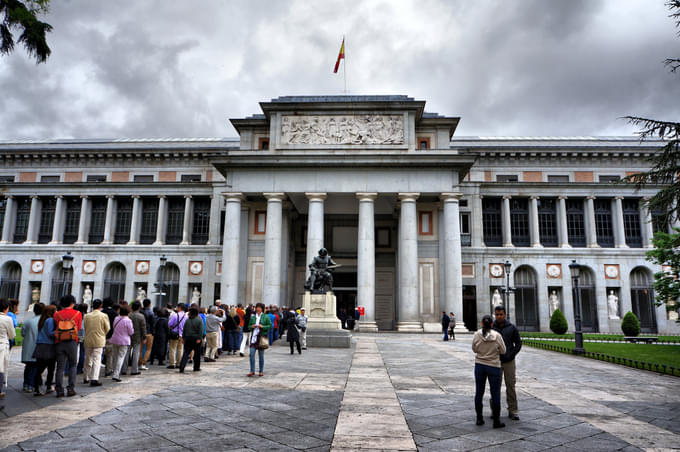
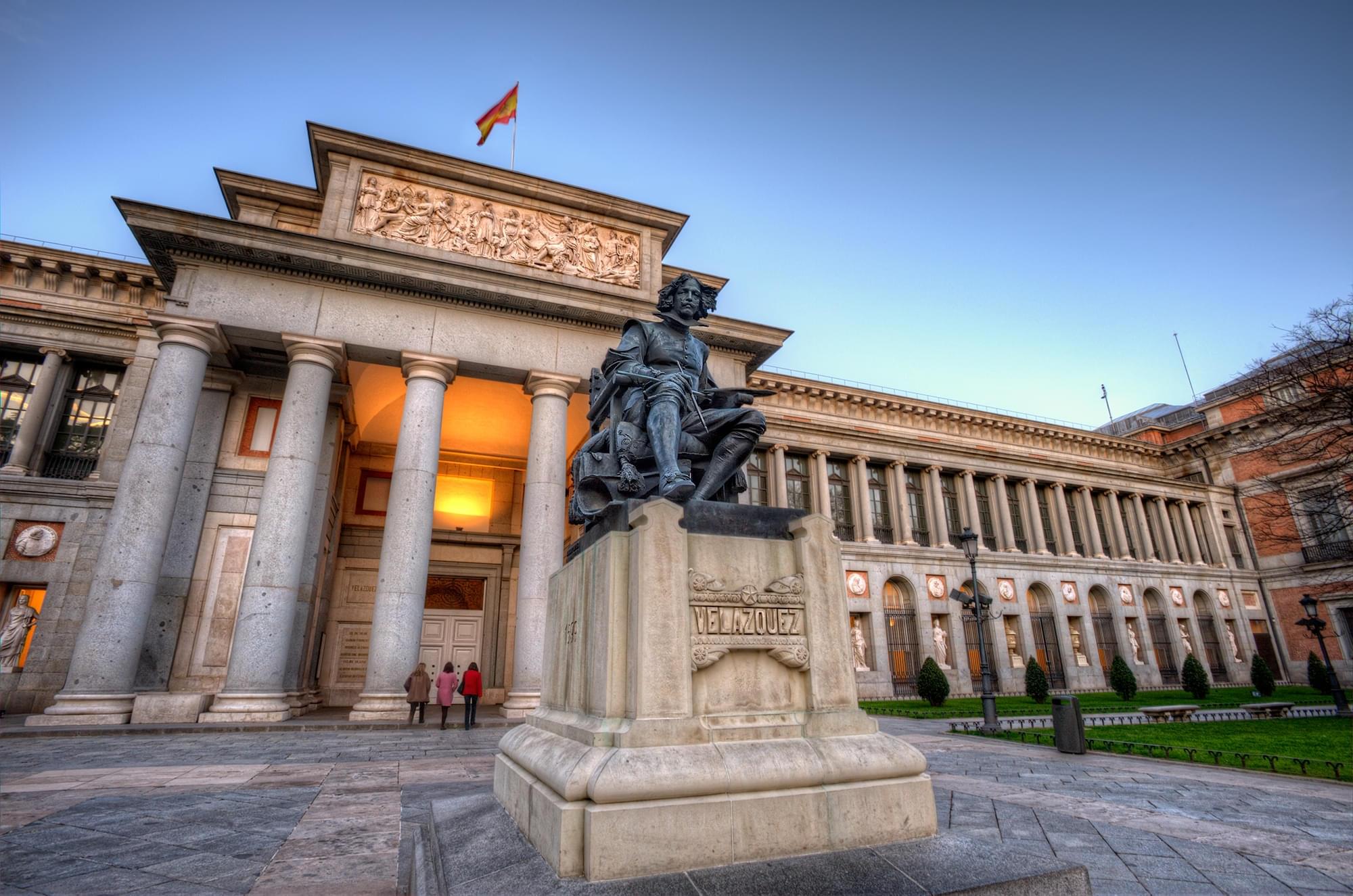
The Prado Museum history dating back to the 18th century. Architect Juan de Villanueva designed its Neoclassical building, which was initially intended for the Natural History Cabinet. However, King Ferdinand VII transformed it into the Royal Museum, and later it was named the National Museum of Paintings and Sculptures.
Opening its doors to the public in 1819, the museum initially housed only 311 paintings. Over time, the collection expanded, especially during the 16th century under the rule of Charles V. In 1881, the museum received several donations, including the donation of the Black Paintings of Goya by Barón Emile d'Erlanger.
Today, the Prado Museum in Madrid displays over 7,500 paintings, including famous works like Francisco Goya’s "La Maja Desnuda," Raphael’s "The Cardinal," and Titian’s "Venus and Adonis." In 2004, more amendments were done and approved by the legal and statutory framework of Prado Museum, which increased its capacity to self-finance.
Architecture of Prado Museum
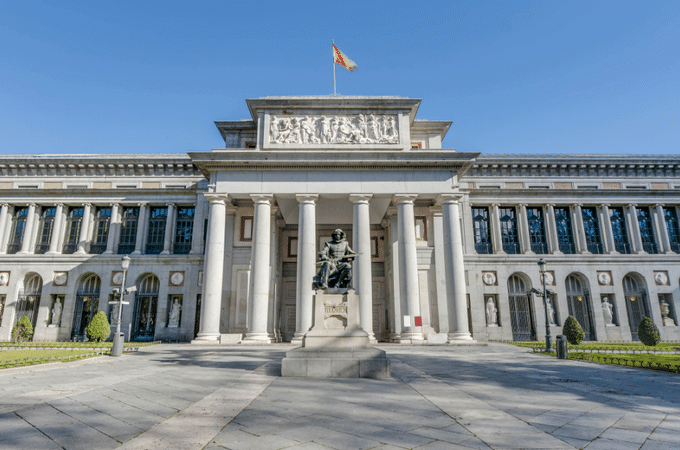
The architecture of the Prado Museum has evolved over the years. It replaced the Natural History Cabinet in 1819, which has since then grown with numerous expansions to accommodate its expanding art collection. In 2007, architect Rafael Moneo designed a significant addition near the Jerónimos cloister to mark an important expansion.
Today, the Prado Museum consists of several buildings, including the Villanueva building, the Jerónimos Cloister, the Casón del Buen Retiro, the administrative building, and the Hall of Kingdoms. Each building contributes to the grandeur of the museum and provides space for displaying its extensive collection of artworks. From its humble beginnings to its modern-day architecture, the Prado Museum stands as an example of the rich cultural heritage of Spain. It also displays the commitment of the museum to preserving and showcasing its artistic legacy for generations to come.
Read More: Prado Museum Collections
Prado Collection Highlights
.png?w=340&dpr=2)
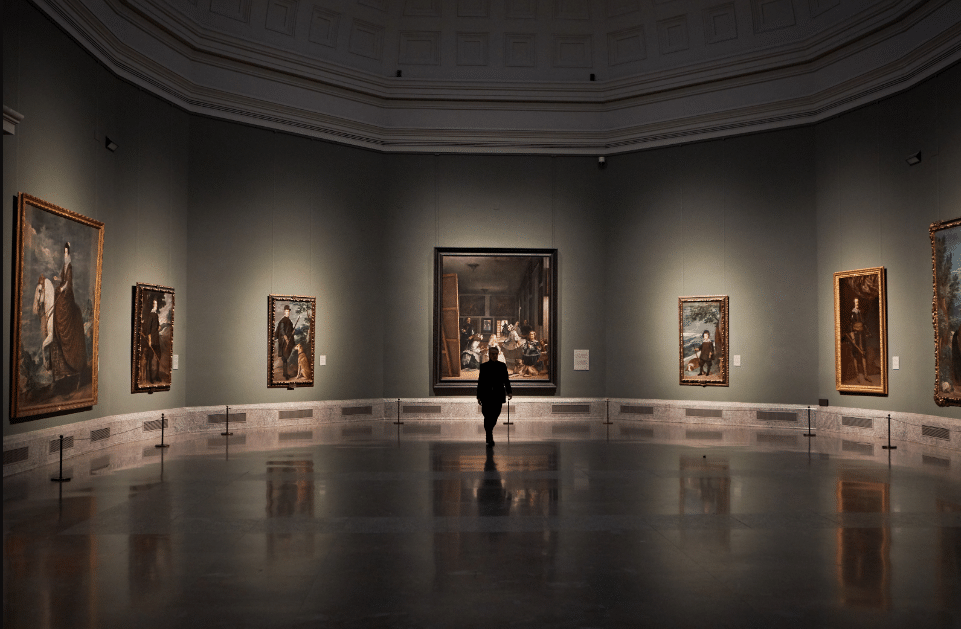
The Prado Museum showcases around 2,800 Spanish paintings spanning from the 12th to the 19th century. This collection includes notable artists like Diego Velázquez, with 48 works from the Spanish Golden Age, and Francisco de Goya, with 140 pieces. Other famous Spanish painters in the collection are El Greco, Juan de Flandes, Luis Meléndez, Pedro Berruguete, and Luis de Morales.
All these Spanish paintings of Prado Museum are displayed on the ground floor across seven galleries. The museum highlights these artists individually to provide an in-depth look at their masterpieces.
.png?w=340&dpr=2)
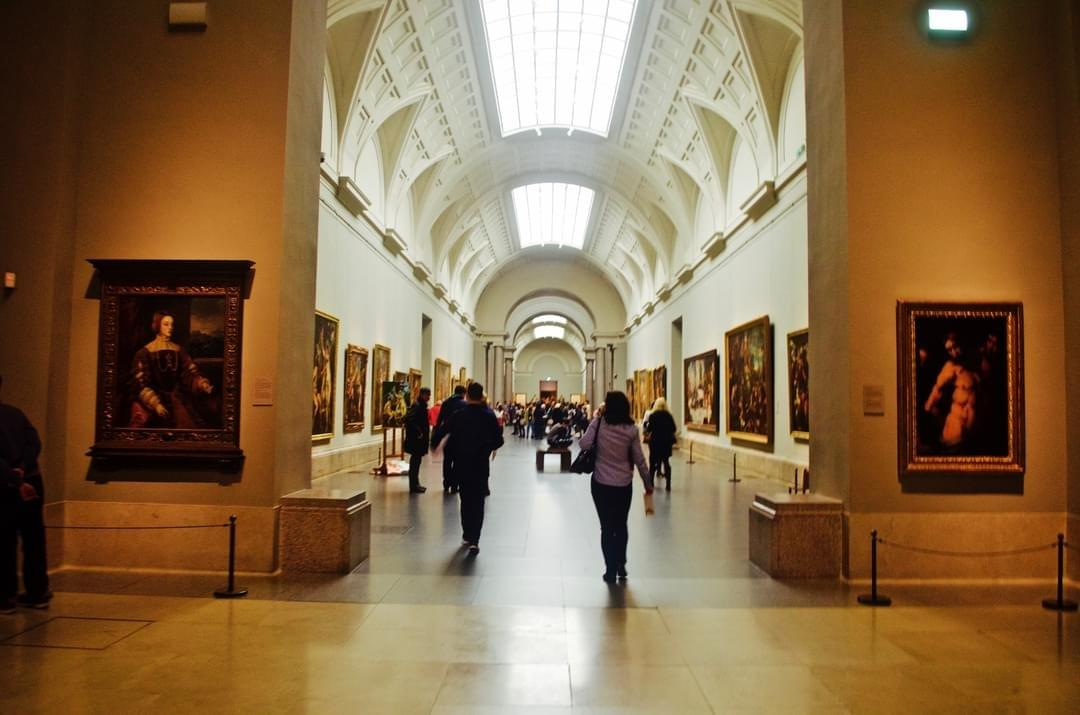
The Prado Museum has a remarkable collection of Italian and French paintings. It displays works by masters like Titian, Guido Reni, and Nicolas Poussin. Initially, Spanish Monarchs did not commission Italian painters until the 1500s. The museum highlights Italian Renaissance master Titian and 16th-century Venetian painters like Paolo Veronese, Tintoretto, and Jacopo Bassano.
In the 17th century, the collection expanded to include Caravaggio, Luca Giordano, and Georges de la Tour. Some famous works in the museum include Antonello da Messina's "The Dead Christ Supported by an Angel" and Caravaggio's "David with the Head of Goliath".
.png?w=340&dpr=2)
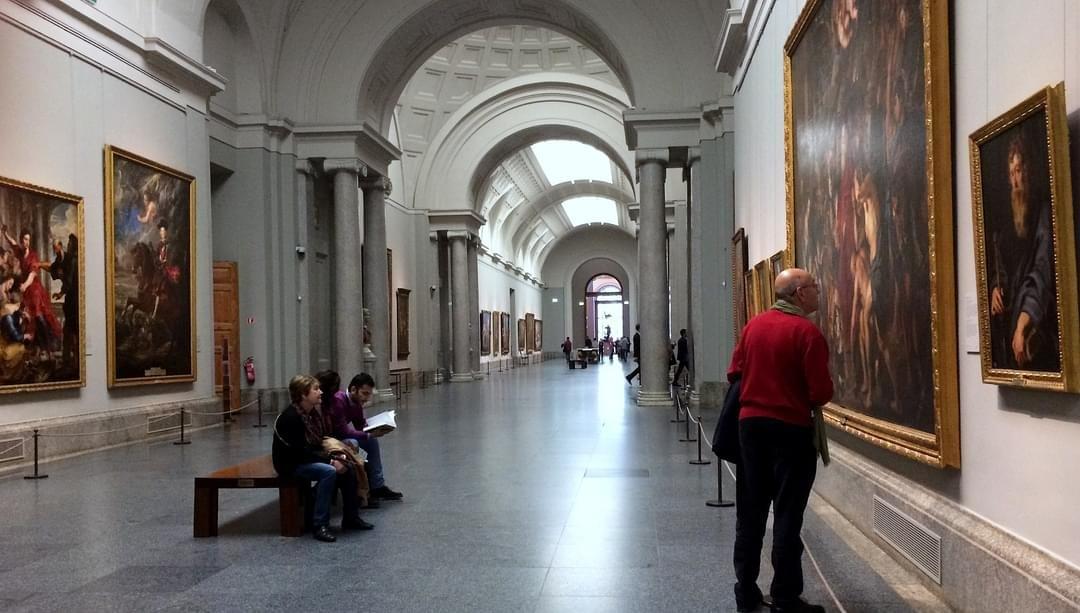
There are over 1,000 Flemish paintings in the Prado Museum, which showcases the popular oil painting technique from the 15th to 17th centuries. This collection grew during a period of joint rule to allow the Spanish Monarch to acquire top Flemish artworks. Some renowned artists whose work is displayed in the museum are Peter Paul Rubens, Anthony Van Dyck, and Rogier Van der Weyden. One of the European masterpieces that is worth witnessing in the Prado Museum is Van der Weyden's "Descent from the Cross.
.png?w=340&dpr=2)
The 19th-century paintings in the Prado Museum are displayed in the Villanueva Building. This large exhibit was borrowed from the Museo de Arte Moderno in 1971. Its collection includes 2,690 artworks, displayed across twelve galleries, having themes from neoclassicism to romanticism. Francisco Goya, Vicente López, Genaro Pérez Villaamil, and Antonio María Esquivel are some of the popular artists displayed here. The highlights include José de Madrazo's “The Death of Viriatus", Mariano Fortuny’s "Nude Boy on the Beach at Portici", and Joaquin Sorolla’s “Boys on the Beach”.
.png?w=340&dpr=2)
The Prado Museum has a vast collection of prints, drawings, and photographs, including 9,000 drawings, 6,000 prints, and nearly 10,000 photographs. Unlike the monarch-owned paintings, these artworks came from various sources. The notable pieces include the "Ground-plan and Elevation of the Museum" by architect Juan de Villanueva. In 1931, Spanish aristocrat Pedro Fernández Durán donated around 2,000 remarkable drawings from the 16th to 19th centuries, including Michelangelo's early drawings for the Last Judgement fresco.
.png?w=340&dpr=2)
There are about 1,000 sculpture pieces in the Prado Museum, with many of them being commissioned by past Spanish monarchs. Several popular Baroque and Renaissance sculptures are displayed here. One of the notable pieces is "Charles V and the Fury", which is a bronze sculpture of Emperor Charles V that is known for its beauty. Another important piece is "Epimetheus and Pandora," attributed to El Greco, which is carved from wood and painted. The decorative arts collection has nearly 3,500 objects, including The Dauphin’s Treasure, vessels passed to Spanish King Philip V, made of precious hardstones, gold, silver, diamonds, and other gems.
Prado Museum Entrances
.png?w=340&dpr=2)
The Puerta de Velázquez is the main entrance to the Prado Museum. It is located right at the front of the museum. This entrance is open every day from 10 a.m. to 7 p.m. The Puerta de Velázquez entrance is specifically for visitors with pre-booked tickets, so the wait time is usually short.
Read More: Prado Museum Entrances
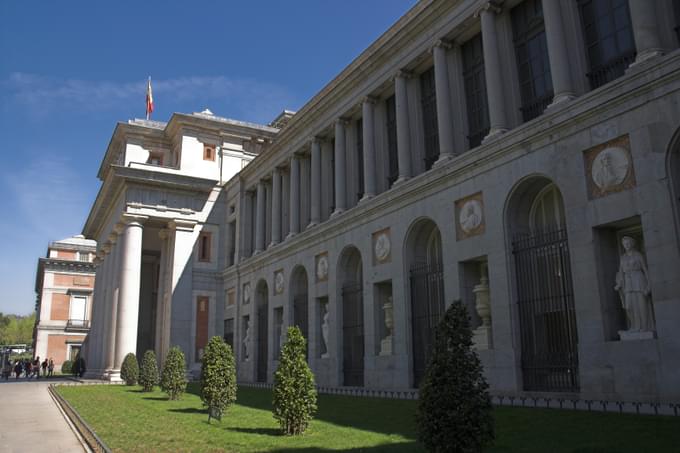
The Puerta de Goya Alta is an entrance on the western side of the Prado Museum. It has an automated ticket machine, which makes it easy to buy tickets. This entrance is also open every day from 10 a.m. to 7 p.m. The wait times are usually short at this entrance because tickets are purchased through the machine.
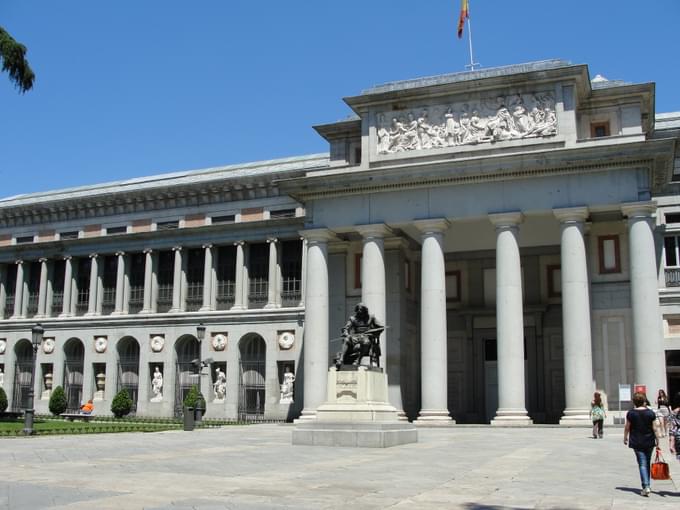
The Puerta de Goya Baja is another entrance on the western side of the Prado Museum, next to the Puerta de Goya Alta entrance on Rue de Rivoli. This entrance remains open from 10 a.m. to 7 p.m. every day. During peak season, the wait time at this entrance can be long, ranging from 1 to 1.5 hours. There are several ticket counters at this entrance for purchasing tickets.
Plan Your Visit to Prado Museum
.png?w=340&dpr=2)
Timings- The opening hours of the Prado Museum are between 10 a.m. and 8 p.m. from Monday to Saturday and 10 a.m. to 7 p.m. on Sundays and public holidays. It offers free entry between 6 p.m. and 8 p.m. from Monday to Saturday and 5 p.m. to 7 p.m. on Sundays and holidays. The museum also remains closed on 1st January, 1st May, and 25th December, while it has limited hours on 6th January, 24th December, and 31st December from 10 a.m. to 2 p.m.
Location- The Prado Museum is located at C. de Ruiz de Alarcón, 23, 28014 Madrid, Spain. It is in central Madrid, near the Neptune Fountain and the Royal Botanical Garden. The closest landmark to the museum is Plaza de las Cortes, which is around 400 metres away.
.png?w=340&dpr=2)
- Lifts are available inside the museum to access all the levels.
- Audio guides provide information about the exhibits in multiple languages.
- There is an extensive library with details on artists, movements, and culture.
- You can enjoy refreshments in the cafeteria of the museum.
- Free WiFi is also available in the Prado Museum.
- You can buy souvenirs from the Gift Shop.
.png?w=340&dpr=2)
- Arrive at the Prado Museum early, anywhere between 10 a.m. and 11 a.m., to avoid crowds.
- Use ATM cards for payments inside the museum.
- Reach 10 to 20 minutes before your ticket time slot.
- Avoid photography in the Prado Museum.
- Buy souvenirs for your friends and family from the Gift Shop in the museum.
FAQs
Why Prado Museum is so famous?
The Prado Museum is famous for its extensive collection of European art, including masterpieces by Goya, Velázquez, and El Greco. It's one of the most significant and prestigious art museums globally, housing works from the Renaissance to the 19th century, attracting art enthusiasts from around the world.
Book Now: Prado Museum Tickets
Is the Prado Museum wheelchair accessible?
Yes, the Prado Museum is wheelchair accessible. It has lifts to help people in wheelchairs move around the museum. The wheelchair entrance is located at Puerta de los Jerónimos, which is at the back of the museum on the western side.
Where is the Prado Museum located?
The Prado Museum is located in central Madrid. Its official address is C. de Ruiz de Alarcón, 23, 28014 Madrid, Spain. It is near the Neptune Fountain and the Royal Botanical Garden. The closest landmark to the museum is Plaza de las Cortes, which is 400 meters away.
Is photography allowed inside the Prado Museum?
No, photography is not allowed inside the permanent exhibitions of the Prado Museum. It includes taking pictures for personal use. You also cannot bring selfie sticks, strobes, or lights into the museum. These photography rules are in place to protect the artworks and provide a good experience for all visitors.
What is the best time to visit the Prado Museum?
Although Prado Museum can be visited throughout the year, the best time to explore the attraction is during the spring (March to May) and autumn (September to November) seasons. During this time, the weather remains pleasant with mild rainfall, which is perfect for seeing the beautiful collection of the museum. You can also visit the attraction on weekdays at 10 a.m. to avoid the crowds and wander through the museum without any hassle.
Spain Attraction Tickets